
January 16, 2026
Buying a Used Car in Winnipeg? The 5-Point Rust Inspection Checklist
Don't get stuck with a Manitoba Special. Learn the 5 critical areas to check for rust before buying any used car in Winnipeg. This checklist could save you thousands.
Buying a used car in Manitoba is different than buying one anywhere else in Canada. That shiny paint job and fresh detail? They often hide structural nightmares caused by years of road salt, calcium chloride, and our brutal freeze-thaw cycles.
We call them “Manitoba Specials”—cars that look great from ten feet away but won’t pass a safety inspection once you get underneath. The sellers know exactly what they’re hiding. After this guide, so will you.
Here are the five areas you absolutely must inspect before handing over your money.
1. The Rocker Panels (Look Behind the Plastic)
The rocker panel is the structural metal strip running below your doors, between the front and rear wheel wells. It’s one of the first places to rust on any Manitoba vehicle—and one of the easiest to hide.
Here’s the trap: Modern trucks and SUVs come with plastic molding that covers the rocker panels. Looks sleek, right? The problem is that these covers trap salt, sand, and moisture directly against the metal. The rust eats away for years while the plastic keeps it hidden from view.
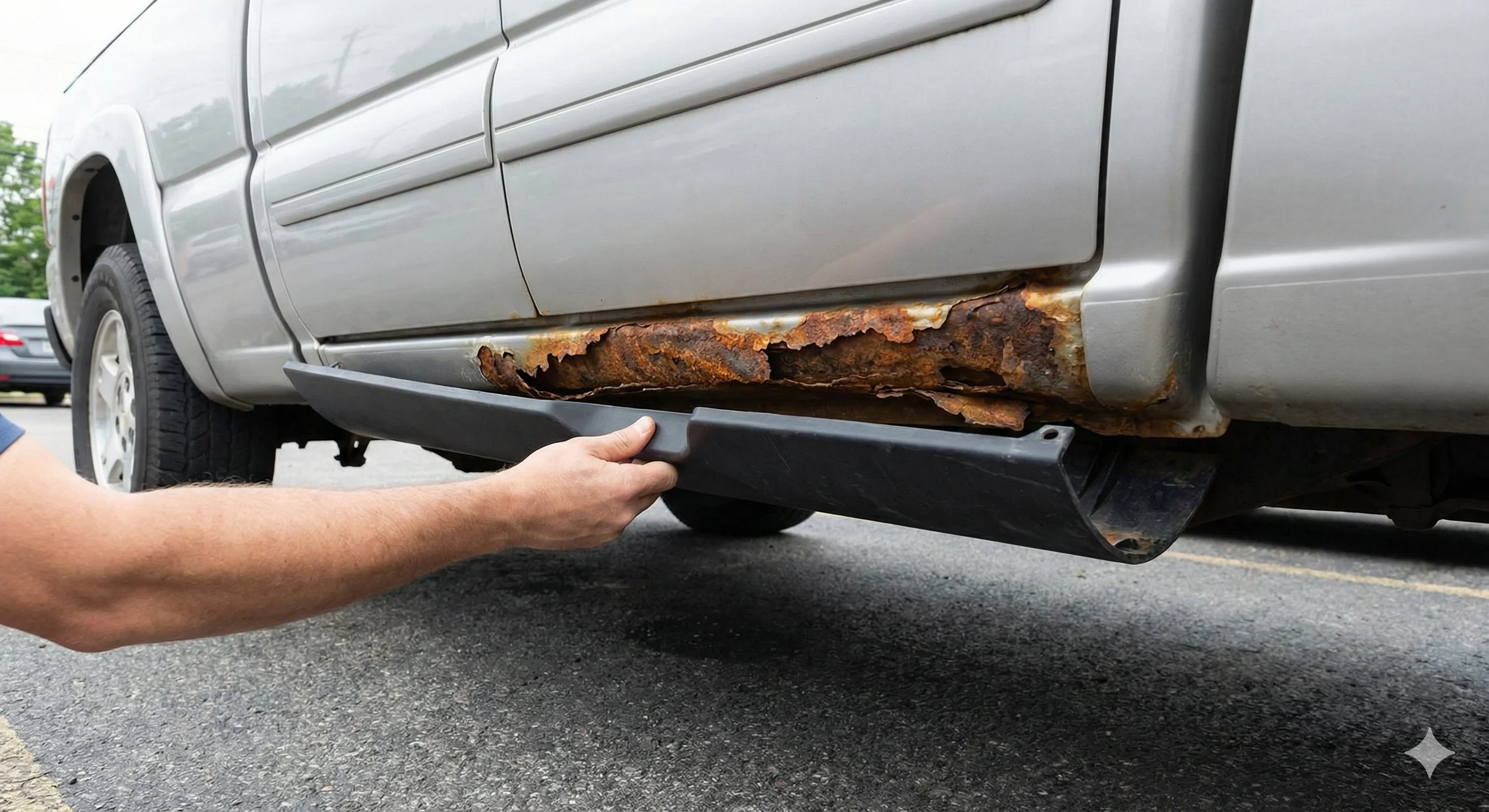
How to check: Get on your knees and physically feel behind the plastic trim. If the metal feels crunchy, soft, or flaky—or if the plastic clips are loose because there’s nothing solid left to grip—walk away. Holes in the rocker panels can actually fail a Manitoba safety inspection because they allow exhaust fumes to enter the cabin.
2. The Bottom Door Seams (The “Fold”)
Every time it rains or you wash your car, water runs down the windows and collects inside the doors. It’s supposed to drain out through small holes at the bottom. But those drain holes clog with debris, and water sits inside the door, rotting it from the inside out.
The weak point is the bottom seam—where the outer door skin folds over and is welded to the inner frame. Rust starts inside and pushes outward. By the time you see bubbling paint on the outside, the inside is already gone.
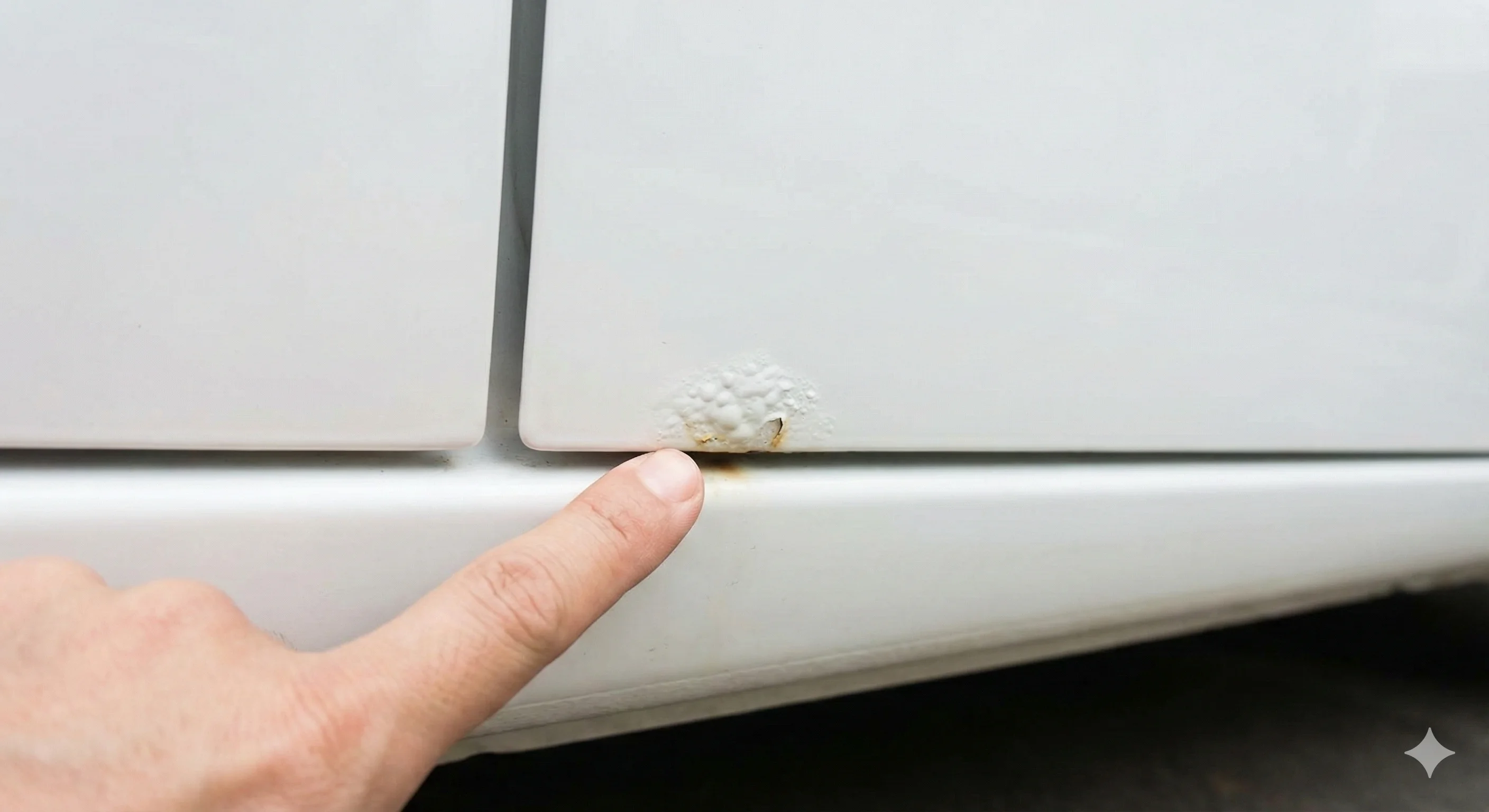
How to check: Open every single door and run your finger along that bottom edge where the metal folds. Feel for bubbling, swelling, or rough texture under the paint. If the paint looks like the image above—blistered and lifting—rust is already well established inside the door. This is expensive to fix properly and nearly impossible to stop once it starts.
3. The Wheel Arches & Fender Lips
Your tires throw a constant spray of salty slush directly at the wheel arches. The front fenders take the worst of it, but the rears aren’t safe either. Most buyers only look at the painted exterior surface. That’s a mistake.
How to check: Reach inside the fender and feel the inner lip where the fender edge is folded over. On a healthy car, this should be smooth painted metal. If it feels rough, crusty, or flaky, corrosion has already started eating through. Also check where the fender meets the door—rust loves that seam.
Don’t forget to look inside the wheel well itself. Push back any plastic liner and inspect the metal behind it. Surface grime is normal. Flaking orange metal is not.
4. The Subframe and Suspension Mounts
This is the inspection that matters most—and the one most buyers skip entirely.
The subframe is the heavy steel cradle that holds your engine, transmission, and front suspension. The rear subframe (if equipped) holds your rear suspension and differential. These are structural, load-bearing components. If they’re compromised, the car is unsafe at any price.
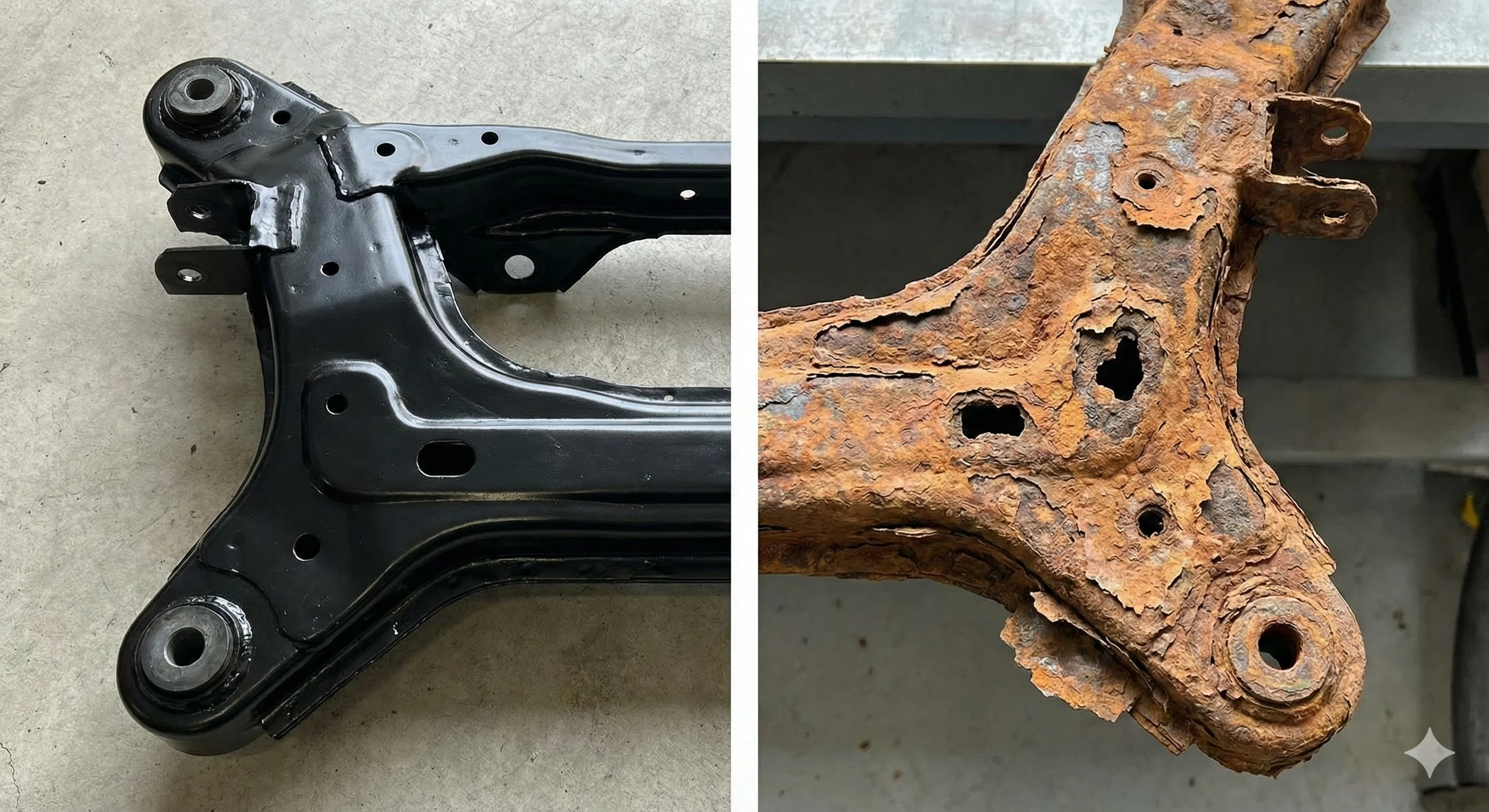
How to check: Turn the steering wheel all the way to one side and look behind the front tire. You’re looking at the control arms, subframe, and mounting points. Some surface rust is normal on any Winnipeg vehicle. What you don’t want to see is what’s on the right side of the image above—metal that looks like puff pastry with flaking layers, holes, or sections that have completely rotted through.
If the subframe looks like that, it doesn’t matter how nice the paint is or how well the engine runs. The car is structurally unsafe, and you should walk away immediately.
5. The Trunk Floor & Spare Tire Well
Trunk seals deteriorate over time, and Manitoba’s temperature swings accelerate the process. Water leaks in and pools at the lowest point—usually the spare tire well. This area rusts quietly for years because nobody ever looks there.
How to check: Pop the trunk and lift up the carpet. Remove the trunk floor cover and take out the spare tire. Look for:
- Standing water or damp carpet
- Heavy rust stains or discoloration
- Soft, spongy, or flaky metal
- A musty, mildew smell
Also check the corners where the trunk floor meets the rear wheel wells. These seams are prone to rust-through, and holes here can let exhaust fumes and road spray into the cabin.
Found a “Clean” One? Keep It That Way.
If the car you’re looking at passes all five checks, congratulations—you’ve found a genuine Winnipeg unicorn. These vehicles exist, but they’re rare, and they won’t stay rust-free on their own.
Your immediate priority should be locking in that condition before the vehicle spends its first winter with you. Road salt doesn’t care that you just bought the car. It’ll start attacking the moment you drive off the lot.
New Vehicle Owner Offer: Bought a used vehicle recently? Bring in your bill of sale within 30 days and get $20 off your first Rust Check application. We’ll protect your investment before Manitoba’s roads can destroy it.
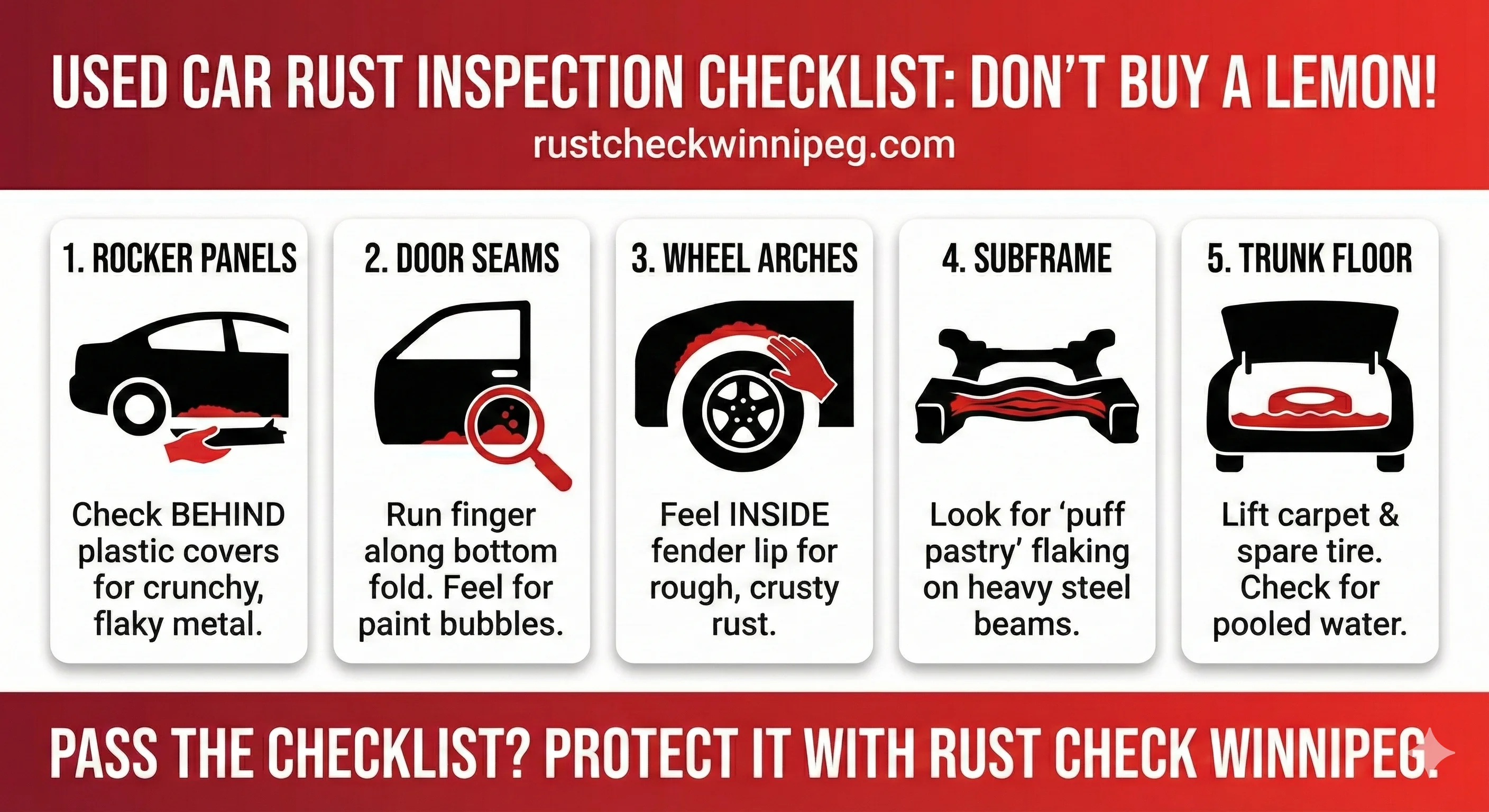
Summary Checklist
Save this image to your phone before you head out to inspect any used car:
Need a Second Opinion?
Not sure if that Kijiji find is actually a good deal? Wondering if that “minor surface rust” the seller mentioned is really minor?
While we aren’t mechanics, we know corrosion better than anyone in Winnipeg. Bring the vehicle by Rust Check Winnipeg for a quick look at the undercarriage before you commit. It takes fifteen minutes and could save you from buying someone else’s rust problem.
Contact us today to schedule a pre-purchase inspection. Peace of mind is worth it.
Ready to Protect Your Vehicle?
Don't let the rusties win. Book your rust protection appointment today.
Book Now